Top Things to do BEFORE You Get Braces

June 15th, 2023

So you’re about to get braces. Congratulations! You are taking a very smart step to improve the health of your teeth as well as get that killer smile in shape. But, as with anything that is good for you, there are a few things you will have to avoid while you “do your time.”

Some foods don’t do so great with braces. The foods listed below should be avoided while you are wearing your braces because they can pop the brackets and bend the wires. In other words, these foods can really ruin your day, and send you back to Lowder Orthodontics to get your braces repaired.

So before you hit the chair, hit the grocery and candy store – one last time – for:

  • Beef jerky
  • Raw carrots
  • Taffy
  • Pizza crust
  • Bagels and other crusty bread
  • Popcorn
  • Hard candy
  • Nuts and seeds

Dr. Lowder and our staff will give you more information about eating with braces. Some foods, such as apples, are okay as long as you cut them in pieces first. Others, like pudding and pasta, are fine just as they are. But then there is “the list”: the foods that are a big no-no and should be avoided. It won’t be forever, so hang in there.

Your braces time will pass before you know it and you can resume more normal eating. But before the braces go on, enjoy these tasty treats. Go ahead and indulge!

Going on vacation? Remember these simple tips!

June 7th, 2023

If you are wearing braces and are planning a vacation, our team at Lowder Orthodontics would suggest that you be prepared. We put together a list of items that will be handy to have with you at all times while you are out of town. They include:

  • Toothpick, flosspick, or other interdental cleaners
  • Travel toothbrush
  • A water bottle or a mini bottle of mouth rinse
  • Orthodontic wax to help with discomfort from protruding wires
  • A small mirror for examining any possible issues in your mouth

Putting these items together in a “braces/oral hygiene kit” may be wise. You may even buy pre-made braces kits. Please ask us for more information.

If you happen to be on vacation and experience problems reaching our office, we suggest going online and searching for orthodontic practices in your area. Most orthodontists will lend a helping hand to another orthodontic patient and get him or her out of pain or discomfort.

We also suggest avoiding the following foods to prevent broken brackets and/or wire distortion while you are on vacation:

  • Chewy, sticky, or gummy food
  • Apples, pears, and other whole fruits (cut fruit into wedges before consuming)
  • Bagels and hard rolls
  • Corn on the cob
  • Hard candies
  • Hard cookies or pretzels
  • All varieties of nuts, including peanuts, almonds, and cashews

Finally, if you are wearing clear aligners and happen to lose your tray, don’t worry! Simply put in either the previous tray or the next tray and contact us as soon as you get home!

Follow these tips and you can have a worry-free vacation! Please give us a call if you have any questions!

Toothpaste Guide

May 31st, 2023

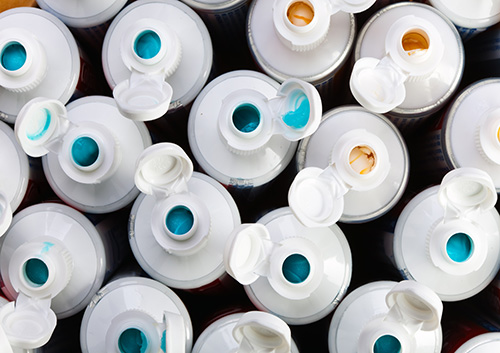
Between the huge number of toothpaste brands on the market today, the different flavors, and claims from most to do different things, it isn’t surprising that people feel so confused when it comes to something that should be as simple as buying a tube of toothpaste. This guide will help you identify the common ingredients in toothpaste, and help you understand the important factors to consider before buying toothpaste again.

Toothpaste comes in gel, paste, and powdered forms. When it comes to the type of toothpaste, the choice is more a matter of preference.

Basic Ingredients

  • Abrasive Agents – Abrasive agents are the scratchy substances added to toothpastes to help in the removal of food particles, bacteria, and minor stains. Calcium carbonate is one of many abrasive materials, and arguably the most common.
  • Flavor – When toothpastes are flavored, they almost always have artificial sweeteners to enhance the flavor of the toothpaste and increase the likelihood that you’ll use it. Flavors run the gamut from traditional mint to cinnamon that may appeal to adults, and bubble gum or lemon lime – flavors to target children.
  • Humectants – Humectants are moisturizing agents that keep paste and gel toothpastes from drying out. Glycerol is commonly used as a humectant.
  • Thickeners – Thickeners are used to give toothpaste its distinctive consistency, and to make it maintain a uniform consistency and come out of the tube easily.
  • Detergents – Sodium lauryl sulfate is the most common detergent used in products that foam up, like toothpaste does in your mouth.

What to Look For in Toothpaste

Fluoride is naturally occurring mineral. It is the most important ingredient to look for in a toothpaste. Although there are people who argue against using fluoride toothpaste, dental professionals like Dr. Lowder emphasize that the fact that the incidence of tooth decay has decreased so significantly in the past 50 years is because of fluoridated toothpaste.

The suggestion that fluoridated water gives you enough fluoride to protect your teeth is wrong. Fluoride toothpaste is the best cavity protection there is. In addition to strengthening tooth enamel and protecting teeth from acid erosion (from acidic foods and drinks,) it remineralizes the surfaces of teeth that are suffering from early acid damage and may prevent developing tooth decay from worsening.

Tartar Control

Tartar is the result of hardened plaque buildup on the teeth. Good oral hygiene and in between twice yearly cleanings from a dental hygienist are the best defense against plaque buildup. Plaque turns to tartar when people neglect their oral hygiene. Over time, tartar can build up on teeth and under the gums, increasing the risk of gum disease.

Your best bet is to use a toothpaste that has a combination of anti-plaque agents. Products containing more than one plaque reducer may be more effective than products that only one. Common ingredients to look for are zinc citrate or pyrophosphates. Triclosan is an antibiotic that is believed to kill bacteria in the mouth, and it can be found in some anti-plaque toothpaste.

Look for toothpaste that bears the seal of the American Dental Association. That seal is an endorsement of the ADA – and it means that many dentists agree that that particular toothpaste does what toothpaste is designed to do. We can also recommend toothpaste to meet your specific oral health concerns at your next visit to our Idaho Falls, Rigby, Rexburg, Afton, and Salmon office.

Flossing Fact or Flossing Fiction?

May 31st, 2023

Somewhere in a bathroom drawer or medicine cabinet, we all have one—that little plastic dental floss dispenser. And whether you use your floss every day (yay!), or have completely forgotten it was in there (not so good), just how much do you know about that sturdy string? Let’s find out!

  • Flossing has been around for hundreds of years.

FACT: It’s been just over two hundred years since Dr. Levi Spear Parmly, a dentist in New Orleans, suggested his patients use waxed silk thread to clean between their teeth. This is considered the first “official” invention of dental floss, although using some form of tool to get rid of food particles between the teeth has been around since prehistoric times.

  • Brushing well is the same as flossing.

FICTION: It’s really not. While brushing does a great job of cleaning food particles, plaque, and bacteria from your enamel, there are some places those bristles can’t… quite… reach. Floss was designed to clean plaque and food from between the teeth and close to the gum line where your brush doesn’t fit.

  • There’s more than one way to clean between your teeth.

FACT: Indeed there is! Not only are there many varieties of dental floss (waxed, flavored, round, flat, thick, thin, in a dispenser, attached to miniature floss wands), but you have alternatives if using any kind of floss is difficult for you. Water-flossers direct a pulsing stream of water between and around the teeth and gum line to remove food particles and plaque. Another useful alternative is the interproximal brush, a tiny little cone-shaped brush designed to remove food and plaque from those hard-to-reach spots.

  • It’s impossible to floss with braces.

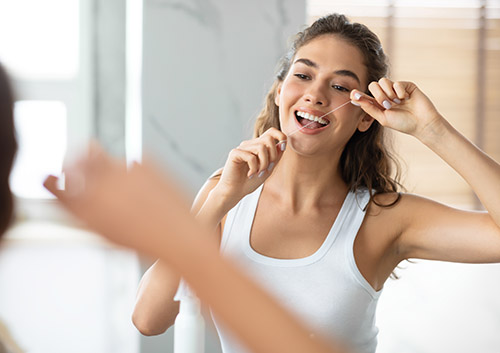
FICTION: Untrue—but it can be more challenging! That’s why there are any number of flossing products designed to work with and around your braces. Stiff strands of floss which work like dental picks, floss threaders, water flossers, and interproximal/interdental brushes can both clean between your teeth and remove food particles and plaque where they collect around your braces. Dr. Lowder can suggest some great options to work with your individual orthodontic treatment.

  • Flossing helps prevent gum disease.

FACT: Scientific studies haven’t provided definitive answers. But dental and periodontal associations strongly recommend daily flossing as one of the most important things you can do to prevent gum disease. Gingivitis, or mild gum disease, is caused by irritated, inflamed gum tissue. Gum tissue becomes irritated and inflamed as a response to the bacteria, plaque, and tartar that stick to your teeth. Anything you can do to help remove these irritants will reduce your risk of gum disease.

  • Flossing helps prevent cavities.

FACT: Dentists strongly recommend daily flossing to remove the food particles and plaque that lead to cavities. Brushing removes cavity-causing plaque from the outer surfaces of your teeth. But there’s a lot of enamel between your teeth as well. Flossing removes plaque from these hidden spots, helping to prevent interproximal (“between the teeth”) cavities from forming.

  • Bleeding when you floss is normal.

FICTION: Bleeding isn’t a typical reaction to flossing. Bleeding gums could be an early sign of gum disease caused by plaque and tartar buildup. On the other hand, if you floss too hard, or go too deeply below the gum line, you can make delicate gum tissue bleed. Ask Dr. Lowder for tips on perfect flossing technique.

  • You need to floss after every meal.

FICTION: Dental professionals generally recommend brushing twice a day and flossing at least once each day. But this suggestion comes with some exceptions. Since you have braces, Dr. Lowder might recommend flossing whenever you have a meal or snack.

  • Your dentist will never know that you haven’t been flossing.

FICTION: Nope. Sure, you can miss flossing a few times and catch up before your appointment at our Idaho Falls, Rigby, Rexburg, Afton, and Salmon office. But built-up plaque between the teeth, red, swollen, or bleeding gums, and gingivitis and interproximal cavities let both you and your dentist know that you’ve been neglecting good dental habits.

  • It’s never too late to start flossing!

FACT: Flossing is a simple, quick, and inexpensive way to maintain tooth and gum health. If you haven’t had much luck flossing in the past, ask Dr. Lowder for flossing tools and techniques that will work for your specific needs. Start now, and see what a difference it will make at your next checkup!

If you had all these flossing facts at your fingertips, congratulations! But if you didn’t, no need to worry, because the real test of your knowledge is in its application. Flossing properly at least once each day will give you something far more rewarding than blog-quiz kudos—you’ll see that regular flossing rewarded with healthier teeth and gums!

“Dr. Lowder and his staff are professional, honest, trustworthy, hard working, friendly, dedicated, and genuinely care about the well being of their patients. My teeth and bite have never looked better in my life and I am indebted to Lowder Orthodontics for the incredible service they have given me.”

~ M. Jiménez

“Before I decided this was the office for my orthodontic work, I had three consultations. I have never been at ease when it comes to work on my teeth. I know I chose the right orthodontist and staff for me. Thank you so much for everything these past couple years. You all have been amazing!”

~ Jeannie A.

“Getting braces was not something I looked forward to doing. I’m so glad I came to Lowder Orthodontics! The entire staff made me feel good every visit. Best experience that I could have while fixing my teeth!! Thanks for the fun times!”

~ Brennan R.
Back to Top
Pixel