
Treatment Options for TMD

January 23rd, 2019

Temporomandibular dysfunction (TMD) refers to a diverse range of disorders that relate to muscular function in the jaw and face — the temporomandibular joint (TMJ). That could mean difficulty opening your mouth, pain in the jaw or face, or any sort of problem with the jaw joint.

TMD can be difficult to diagnose because of the varied causes. Whatever the case, an accurate diagnosis from Dr. Lowder helps make treatment as successful as possible.

Most often, jaw problems will resolve themselves within several weeks or months. Surgeries like arthrocentesis, arthroscopy, and open-joint surgery should be a last resort. More conservative and reversible treatments should come first and are in fact the most critical step in the treatment of TMD.

Less invasive treatments like acupuncture and splints can be helpful, but that will depend on your particular case. It’s worth your while to speak with Dr. Lowder at our Idaho Falls, Rigby, Rexburg, Afton, and Salmon office to learn about solutions that could work for you.

A combination of treatments will most often produce the greatest relief for TMJ patients. It’s a good idea to avoid activities that overuse the jaws, such as chewing gum or clenching your jaws.

You can be proactive in finding relief for TMD by trying the following remedies at home:

  • Eat soft food: When you eat soft and/or blended food, your jaw gets an opportunity to rest. Avoid chewy and crunchy food, and food that requires you to open your mouth wide, like apples or corn on the cob.
  • Apply moist heat: A hot water bottle wrapped in a moist towel can help reduce symptoms.
  • Apply ice: Applying an ice pack wrapped in a cloth or towel for no longer than 15 minutes may also reduce pain and promote healing.
  • Do jaw exercises: A physical therapist can help identify the exercises that will work for you. Jaw exercises have been shown to be an effective treatment method that can be performed at home.
  • Relaxation: Actively try to relax the muscles of the face and lips, and let your teeth come apart. Many find meditation, yoga, and slow, deep breathing to be helpful for reducing stress and tension.
  • Avoid wide yawns: Keep your fist under your jaw when you feel a yawn coming on, to keep your jaw from opening too widely.

Questions, questions…

January 16th, 2019

When beginning orthodontic treatment, most patients ask Dr. Lowder and our team a lot of questions about what to expect, while others choose to just "go with the flow" and leave it to us to build for them a beautiful smile. And for our team at Lowder Orthodontics, that's understandable.

But for those who do ask questions, two of the ones we frequently hear are "Will my braces hurt?" and "How long will these be on?"

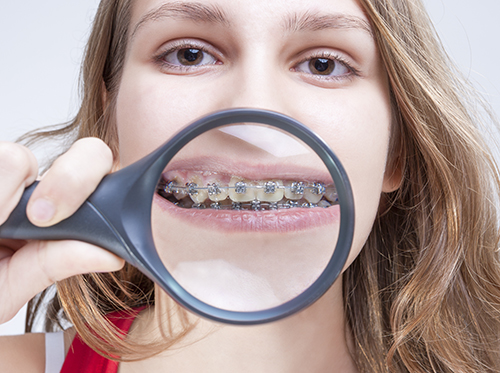
We explain to our patients that despite what they've heard, braces do not hurt when they're initially put on. Yes, you will experience soreness after your braces are placed and when your teeth start to move. Too often, our patients hear horror stories about how much it hurts to get the braces on, so they tend to over-worry. The truth is, after their braces are on, almost all patients say "that's it?" because it's actually easy and painless!

At Lowder Orthodontics, we answer most of your other questions during your initial exam. When a patient visits our office for the first time, we give him or her a time estimate of how long it will take to achieve their ideal smile. All other questions are answered at the bonding appointment when the braces are placed. We cover all the topics, everything from eating to brushing with braces, but we also know that after your initial appointment, it's natural for you to have questions about your or your child's treatment. And we are always here for you; we are thorough and always try to answer any questions or concerns you may have. As a patient, that's one thing you never have to worry about. You will always know what's going on throughout your orthodontic experience.

Your First Orthodontist Visit

January 9th, 2019

If you’ve never been to an orthodontist before, you might be wary of what to expect during your first visit. Your dentist may have recommended an orthodontic appliance if it could improve the state of your oral health. More often, you may suspect that you or your child should have orthodontic work done if the time is right financially.

Understanding the various options your orthodontist can perform will be helpful to know before your appointment.

Your initial appointment usually lasts at least an hour. It’s common that diagnostic work will need to be done. This might include getting X-rays so Dr. Lowder can better understand the overall structure of your mouth. A quick mold of the mouth may also be taken if braces are a possibility.

Your first appointment is intended to find out how we can efficiently give you a great smile! Here’s a list of common questions you might ask during your first visit:

  • Is now the right time for treatment, or should it wait?
  • What is the estimated length of time for the treatment?
  • How much should I expect to pay? What are the payment options?
  • What can I do to prevent or minimize pain?
  • Is it likely that I will wear extra appliances in addition to braces to correct my overbite, underbite, or other problems?
  • Are there specific foods I will need to avoid?
  • Will braces prevent me from playing my favorite sport or musical instrument?
  • How can I keep my teeth clean with braces?
  • How often will I be expected to come in for checkups and other appointments?

Don’t be afraid to ask these and other questions before you or your child commits to getting braces. Dr. Lowder and our team are happy to answer any of them before or after your visit.

Once you’ve had your initial consultation, our team will be here throughout the entire process if any problems arise. We look forward to seeing you at your first appointment in our Idaho Falls, Rigby, Rexburg, Afton, and Salmon office!

Tooth Protection and Winter Sports

January 2nd, 2019

Just because it’s cold out there doesn’t mean you’ll give up keeping fit and active! Winter is the season for some of our favorite team sporting activities, and when you’re donning your protective gear, don’t forget to protect your teeth as well.

  • Basketball

This sport actually tallies one of the highest counts of dental injuries. Running, jumping, and diving for the ball on an unforgiving court can lead to tooth and jaw injuries.  And for every ten men on the floor, it seems like there at least 50 flailing elbows in the paint.

  • Hockey

Notorious for the toll it takes on teeth, hockey is a game of sticks, ice, and whizzing pucks. And when your sport’s penalties include the terms hooking, slashing, and tripping, the more protection, the better.

  • Skiing

When you are flying down the slopes, combining powdery snow and speed, mouth protection is a good idea. This also applies to snowboarding and other snow sports.

  • Wrestling

Grappling and pinning in close quarters can lead to unintended injuries after accidental contact with the mat or your opponent.

Different uniforms, different equipment, and different playing fields, but all these sports have one thing in common—the easiest way to protect your teeth while playing them is with a mouth guard.

Mouthguards generally come in three forms:

  • Over the counter, ready-made appliances. These are available in drugstores and sporting goods stores, but might not be a comfortable fit as they are pre-formed sizes.
  • The “boil-and-bite” option is a mouthguard form placed in hot water. You then bite down to shape it to your mouth and teeth.
  • Custom mouthguards can be fabricated just for you through our Idaho Falls, Rigby, Rexburg, Afton, and Salmon office. These appliances are designed to fit your individual mouth and teeth, so provide a better fit and better protection. They are also usually more durable and more comfortable. If you wear braces, you definitely need a custom mouthguard to prevent an injury to your mouth or braces caused by an ill-fitting appliance.

Whether you play on a team or pursue individual athletic activities, keeping safe as you keep fit is your first priority. We would be happy to discuss your mouthguard options for any sport, any time of year.

“Dr. Lowder and his staff are professional, honest, trustworthy, hard working, friendly, dedicated, and genuinely care about the well being of their patients. My teeth and bite have never looked better in my life and I am indebted to Lowder Orthodontics for the incredible service they have given me.”

~ M. Jiménez

“Before I decided this was the office for my orthodontic work, I had three consultations. I have never been at ease when it comes to work on my teeth. I know I chose the right orthodontist and staff for me. Thank you so much for everything these past couple years. You all have been amazing!”

~ Jeannie A.

“Getting braces was not something I looked forward to doing. I’m so glad I came to Lowder Orthodontics! The entire staff made me feel good every visit. Best experience that I could have while fixing my teeth!! Thanks for the fun times!”

~ Brennan R.
Back to Top
Pixel