
Protecting Your Smile with Mouthguards

February 28th, 2018

If you participate in sports or other physical activities, it’s wise to consider getting a mouthguard. Also known as mouth protectors, mouthguards are a device worn over the teeth to lessen the impact of a blow to the face.

This reduces the chance that you might lose teeth or sustain other serious oral injuries. We recommend that all patients involved in a contact sport such as wrestling, football, or hockey wear a mouthguard because of the high risk of such injuries.

However, anyone involved in a physically demanding sport or activity should wear a mouthguard as well.

Can you imagine what it would be like to lose a few of your front teeth? The way you talk, eat, and smile would all change. Potential injuries when you don’t wear a mouthguard include chipped and broken teeth, fractured jaws, root damage, damage to crowns and bridgework, concussions, and/or injury to the lips, cheeks, or gums.

Types of Mouthguards

There are three different types of mouthguards — typically made of a soft plastic material or laminate. You can decide which works best for you in terms of budget, fit, and comfort.

  • Stock mouthguards are prefabricated to a standard size. They offer adequate protection, but you need to make sure you find one that fits properly and comfortably. Stock mouthguards are readily available at department stores, sporting goods stores, and online.
  • Boil-and-bite mouthguards are placed in boiling water to soften them, then into the mouth so they can conform to the shape of the teeth. Boil-and-bite mouthguards are more expensive, but offer a more customized fit than stock ones. You can find these in department stores, pharmacies, sporting goods stores, and online.
  • Custom-made mouthguards are created just for you by Dr. Lowder. These offer the best fit and comfort of all the options, but they are also the most expensive. Ask a member of our Idaho Falls, Rigby, Rexburg, Afton, and Salmon team for more information.

The American Dental Association says a good mouthguard should be easy to clean, fit properly, be comfortable, and resist tearing or damage. It shouldn’t restrict speech or breathing.

Still not sure if you need a mouthguard or which kind is right for you? Ask Dr. Lowder or one of our staff members for more information.
What is early intervention?

February 21st, 2018

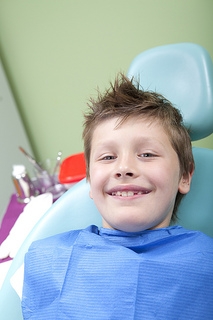
Many developing orthodontic problems can be intercepted and corrected if diagnosed and treated at an early age. Dr. Lowder and our team at Lowder Orthodontics recommend children have their first orthodontic evaluation no later than age seven, or younger if the front four permanent teeth have replaced the baby teeth. Early treatment, also known as interceptive treatment or Phase I treatment, provides both timely detection of problems and greater opportunity for more effective treatment. Early intervention guides growth and development, preventing serious problems later.

If your child is showing these signs, it may be time to think about early orthodontic treatment:

  • Early or late loss of baby teeth (your child should typically start losing teeth around age five or six, and will have all their permanent teeth in around age 12 to 13)
  • Difficulty chewing and/or biting
  • Mouth breathing
  • Sucking his or her thumb
  • Speech impediment
  • Protruding teeth (the top teeth and the bottom teeth extend away from each other)
  • Crowded front teeth
  • Teeth that don't come together in a normal manner or even at all

Early intervention will greatly reduce the severity of your child’s case, and therefore reduce the length of treatment time and cost for a second phase of treatment when all of his or her permanent teeth have erupted. An evaluation at our Idaho Falls, Rigby, Rexburg, Afton, and Salmon office will determine if your child’s dental and skeletal growth is proceeding properly or if interceptive treatment is needed. Many times, a more severe problem can be corrected using sophisticated removable appliances instead of traditional orthodontic treatment.

To schedule a consultation for your child to visit with Dr. Lowder, please give us a call! We will provide your child with an initial exam, and discuss with you the best steps to take toward caring for your child's smile.

Team Dark Chocolate

February 14th, 2018

Valentine’s Day is the holiday to celebrate all the treasured relationships in your life. It’s a time to honor love in all shapes and forms with cards, social gatherings, and sometimes even binge eating of sweets.

It's hard to look the other way when grocery stores and pharmacies are invaded with goodies connected to the Valentine’s Day theme, and especially if you’re on the receiving end of some of these sweets. We get it. In fact, we’re all for it!

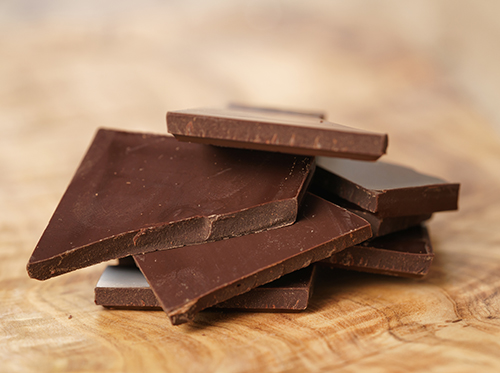
However, we also support a cavity-free smile. So in the interest of your dental and general health, and because we think it’s genuinely tasty, Dr. Lowder recommends an alternative to the Valentine treats you may be accustomed to: dark chocolate. 

Yes, Healthy Chocolate Exists

Studies have shown that dark chocolate is high in flavonoids, an ingredient found in the cocoa beans used to make chocolate. Flavonoids can help protect the body against toxins, reduce blood pressure, and improve blood flow to the heart and brain.

By opting for dark chocolate rather than milk chocolate, you get to reap these benefits! Pretty sweet, right? Just make sure to stick to high-quality dark chocolates that have undergone minimal processing.

Dark Chocolate, AKA Protector of Teeth

Not only does dark chocolate provide some nice benefits for your overall health, it also helps protect your teeth against cavities! According to the Texas A&M Health Science Center, dark chocolate contains high amounts of tannins, another ingredient present in cocoa beans.

Tannins can actually help prevent cavities by interfering with the bacteria that causes them. Think of them as scarecrows for bacteria. They don’t always prevail, but isn’t it nice to have them there?

Smooth Never Sticky

Unlike many popular candies, dark chocolate is less likely to stick in the crevices of your teeth. Chewy, gooey sweets are more likely to hang around in your mouth for longer periods of time, which means they raise the odds of your harboring cavity-creating bacteria.

While some dark chocolates have additives like caramel or marshmallow, it’s best to opt for the plain varieties, which are just as delicious. If you’re feeling festive, though, a dark chocolate with caramel is still better than a milk chocolate with caramel, so that’s the way to go!

While dark chocolate has some pretty sweet benefits, the most important thing to remember (whether you go the dark chocolate route or not), is that moderation is key. That being said, we hope you have fun satisfying your sweet tooth and shopping for treats for your friends and loved ones. Happy Valentine’s Day from all of us at Lowder Orthodontics!

Braces-Friendly Snack Ideas

February 7th, 2018

Wearing braces limits some of the snacks you can eat. However, you still have plenty of choices for fun and healthy foods that will not harm your braces. You can even enjoy a few crunchy treats as long as you choose them carefully.

Sweet Treats

Puddings provide a sweet and safe snack while you are wearing braces. You can even select flavored puddings such as caramel to satisfy the urge for items you should not eat. They can be purchased already made or whipped up at home. You can even select low-sugar varieties that still taste good. Ice cream and yogurt are also choices; just avoid products with nuts.

Healthy Snacks

Fruits are excellent for a healthy snack. You just need to avoid biting into hard fruits such as whole apples. You can avoid the problem with fruit cocktails packed in water. Cocktails still have the nutritional benefits and flavor, but contain softer pieces. Avoid fruits packed in heavy syrup, though; these tend to have too much sugar.

Crunchy or Salty Snacks

Not all crunchy foods are bad; you just need to limit the crunch. Walnuts are a softer nut that can normally be eaten safely. Small cheese crackers satisfy the need for crunchy and salty. You can also allow pieces to dissolve slightly in your mouth before chewing, to reduce any risk.

Soft granola bars are also an option. Check the granola ingredients to ensure there are no large nut pieces, and brush your teeth afterwards. Otherwise pieces can become stuck in your dental work.

If you have any questions about safe snacks, do not hesitate to ask Dr. Lowder and our staff.

“Dr. Lowder and his staff are professional, honest, trustworthy, hard working, friendly, dedicated, and genuinely care about the well being of their patients. My teeth and bite have never looked better in my life and I am indebted to Lowder Orthodontics for the incredible service they have given me.”

~ M. Jiménez

“Before I decided this was the office for my orthodontic work, I had three consultations. I have never been at ease when it comes to work on my teeth. I know I chose the right orthodontist and staff for me. Thank you so much for everything these past couple years. You all have been amazing!”

~ Jeannie A.

“Getting braces was not something I looked forward to doing. I’m so glad I came to Lowder Orthodontics! The entire staff made me feel good every visit. Best experience that I could have while fixing my teeth!! Thanks for the fun times!”

~ Brennan R.
Back to Top
Pixel